Easy Leopard Face Paint: Step-by-Step Leopard Design for Beginners
Updated: Jun 22
Want to learn easy leopard face painting? In this step-by-step guide, you'll discover how to create a colorful leopard face paint design using fun fantasy colors — perfect for beginners.
Leopard face painting is a popular animal face paint design for children and works well for birthday parties, jungle-themed parties, and events. With its recognizable leopard spots, cat-like features, and playful colors, a leopard is instantly recognizable. Unlike a classic lion or tiger, this design uses vibrant fantasy colors for a unique and eye-catching result.
Although this design looks impressive, it is surprisingly easy to create. With a few basic colors, a sponge, and simple brush techniques, you can quickly create a striking jungle animal that appeals to both boys and girls.
Are you looking for leopard face paint ideas, jungle face paint, animal face paint, or do you want to learn how to paint an easy leopard without complicated techniques? In this blog, you'll learn exactly which materials you need and how to build this design step by step.
What You Need for Leopard Face Painting
You only need a few basic supplies for this leopard face paint design:
1. Green Face Paint
For the base of the leopard.

2. Blue Face Paint
For extra color and depth.

3. Purple Face Paint
For additional color in the leopard spots.

4. White Face Paint
For the muzzle and highlights.

5. Black Face Paint
For the leopard spots and details.

6. Sponge
For larger areas of color.

7. Brushes (2 Sizes)
Thin brush for details
Slightly thicker brush for larger shapes

Step-by-Step Leopard Face Paint
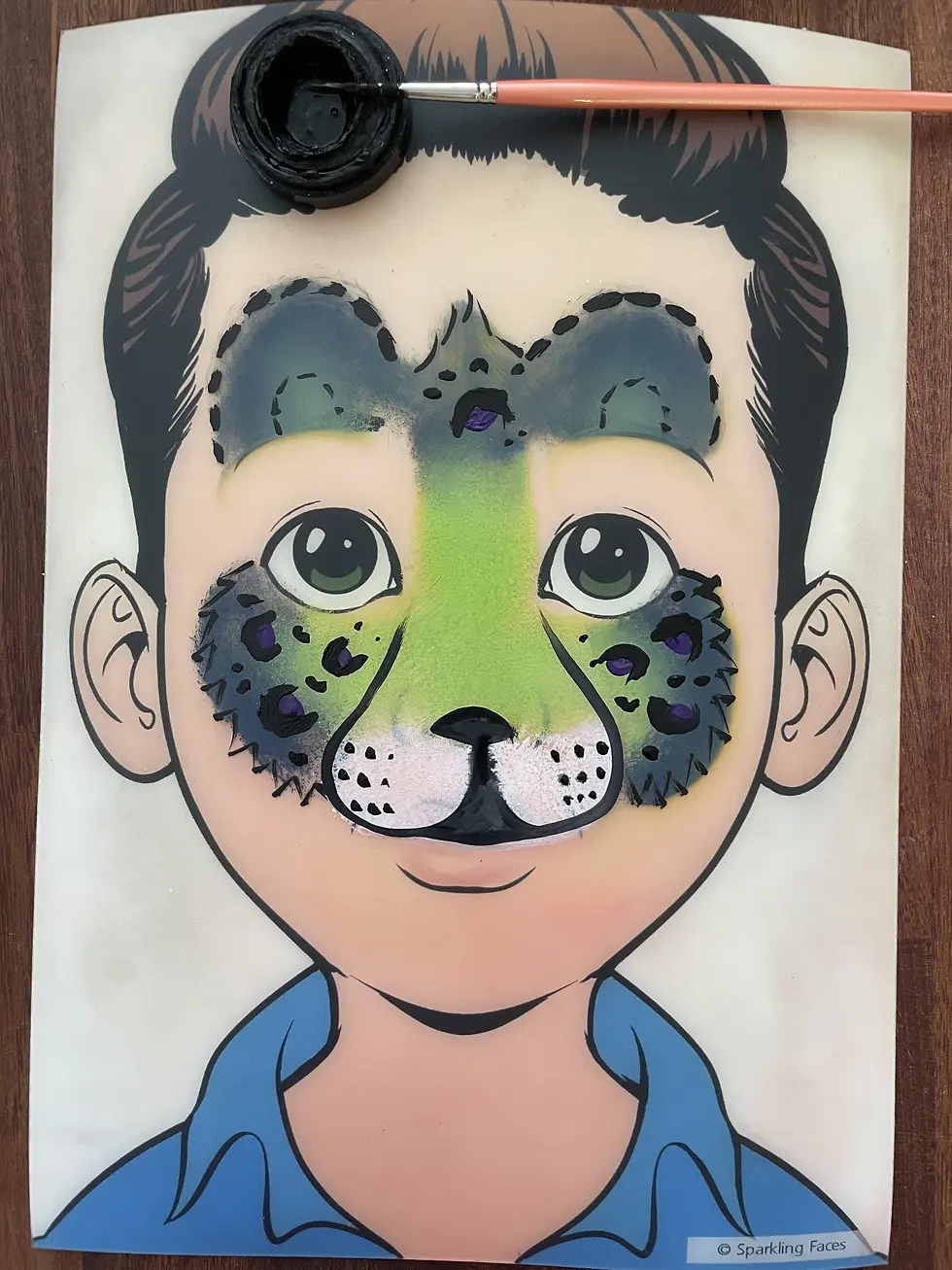
Below you'll see step by step how to create a colorful leopard face paint design. This look is quick, eye-catching, and perfect for beginners.
Step 1: White Muzzle
Using a sponge, apply white face paint around the mouth and nose, extending to the smile lines.
💡 Tip: Leave enough space for the nose and mouth details.

Step 2: Green Base
Using a sponge, apply green face paint to the cheeks and from the nose up toward the forehead.
💡 Tip: Use a dabbing motion for smooth, even coverage.

Step 3: Blue Accents
Apply blue face paint to the green sponge to create a soft transition from green to blue.

Step 4: Blue and Green Fur
Add more blue face paint around the edges of the green areas. Also create the ears and a small hair tuft.
💡 Tip: This adds depth and gives the design a playful appearance.

Step 5: Purple Spots
Create spots using purple face paint. These will become the centers of the leopard spots later.

Step 6: Muzzle
Use black face paint to create a cat nose. Draw a line from the nose to the upper lip, continue along the smile line, and curve up toward the inner corner of the eye.
💡 Tip: Work in small steps for the most symmetrical result possible.

👉 Do you notice that clean lines are difficult? Many beginners struggle with this, especially when painting animals. With a few simple brush techniques, it quickly becomes much easier.
Step 7: Muzzle Dots
Use black face paint to create rows of dots on the muzzle. These form the base of the whiskers.

Step 8: Ears
Add short black strokes along the outline of the ears and finish the hair tuft.

Step 9: Fur
Outline the fur on the cheeks using a zigzag motion.

Step 10: Leopard Spots
Create large leopard spots around the purple areas. Add smaller dots around the larger spots.
💡 Tip: Don't just paint round dots. Leopard spots are often open circles and irregular shapes.
Step 11: Whiskers
Use white face paint to add whiskers.

Step 12: Teeth (Optional)
Use white face paint to create teeth in the corner of the mouth and outline them with black.

Common Mistakes When Painting a Leopard
Watch out for these beginner mistakes:
Using only dots instead of leopard spots → less recognizable
Adding too many spots → messy result
Not using enough contrast between colors → flat appearance
Making the ears too small → less cat-like
✔ Large shapes and strong contrast make all the difference.
Variations of Leopard Face Painting
Want to change it up?
Realistic leopard face paint
Pink leopard face paint
Glitter leopard face paint
Cheetah face paint
👉 Perfect for birthday parties, festivals, and animal-themed events.
Cheetah Face Paint
Want to turn this design into a cheetah? You can. Although a cheetah and a leopard are different animals, they look quite similar when used as face paint designs. Both have a feline appearance, a light-colored base, and dark markings.
The biggest difference is the pattern. A leopard has rosettes (open spots), while a cheetah has small solid black spots. In addition, cheetahs often have dark lines running from the inner corners of the eyes down toward the mouth.
To transform this leopard into a cheetah, simply replace the leopard spots with small black dots and add the characteristic tear lines if desired.
When to Use This Design
Leopard face painting is perfect for:
Birthday parties
Animal-themed parties
Festivals
Themed events
👉 Colorful, eye-catching, and always popular with children.
Ready to Paint Your Own Leopard?
With these steps, you can already create a beautiful and recognizable leopard. With practice, your lines will become cleaner and you'll work faster.
But do you notice that:
your lines aren't clean
your leopard isn't easily recognizable
or it takes longer than you'd like
That's completely normal.
👉 In Mia's Magic's face painting course, you'll learn step by step:
how to create clean lines
how to work faster
and how to build popular animal designs
So you can face paint with confidence — even if you're still a beginner.

Comments