Cleaning Face Paint Brushes: Tips and Step-by-Step Guide for Parents
Updated: Jun 15
When you face paint children, fun always comes first. Still, there’s one part that often gets forgotten: cleaning your face paint brushes. Clean brushes are not only essential for a beautiful result but also for healthy skin. In this guide, I’ll explain why and how to clean your face paint brushes properly so you and your children can enjoy face painting without worry.
Why cleaning face paint brushes is important
When face painting, you often use the same brushes for different colors and faces. Leftover paint, bacteria, and dirt can build up in the bristles of your brushes. This can lead to:
Skin irritation or breakouts on sensitive children’s skin.
Muddy colors when old paint mixes in.
Faster wear and tear of your brushes, causing bristles to fall out or splay.
By cleaning your face paint brushes regularly, you ensure a hygienic and enjoyable face painting experience.
How often should you clean face paint brushes?
A common question is: how often do brushes need cleaning?
After every use: rinse your brushes briefly and remove excess paint.
After a face painting party: give your brushes a thorough wash.
In between painting multiple children: use a quick brush cleaner spray or a damp cloth to remove the worst residue.
This way, you prevent bacteria from spreading and keep your colors vibrant.
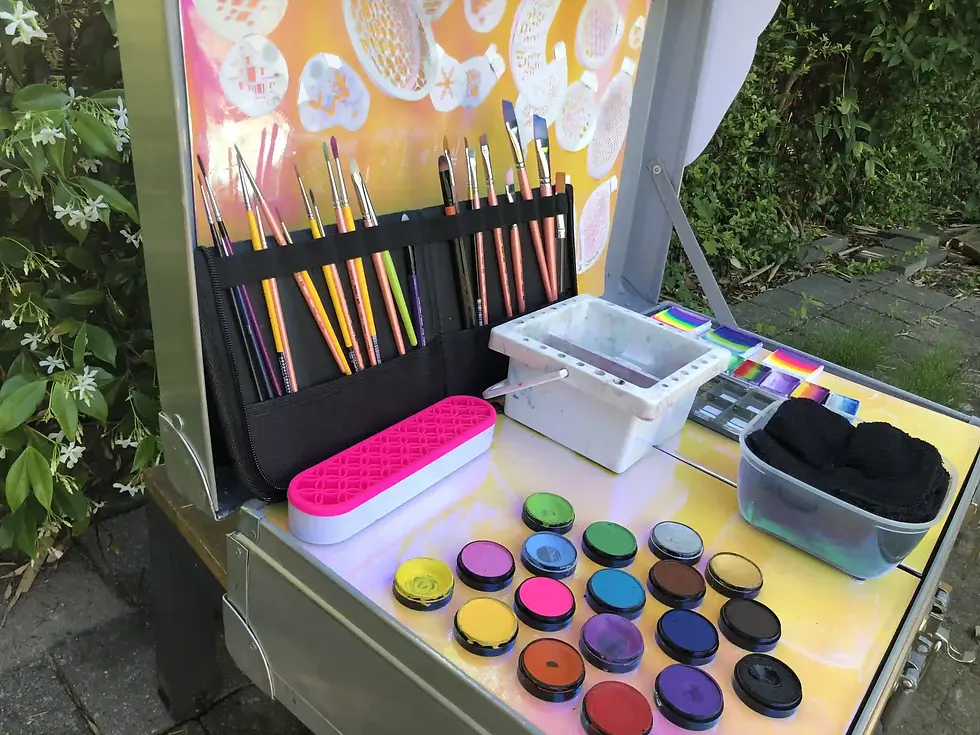
Step-by-step: cleaning face paint brushes
Cleaning your brushes doesn’t have to be complicated. Just follow these simple steps:
Rinse the brushes
Hold the bristles under lukewarm running water. Make sure to keep the handle dry so the glue inside the ferrule doesn’t loosen.
Use a gentle soap or brush soap
Gently swirl the bristles over your palm or a brush mat with a bit of soap. Baby shampoo or a special brush soap works very well and is gentle on the hairs.
Rinse thoroughly
Make sure there’s no soap left in the brush. Residue can affect the paint and irritate the skin.
Dry carefully
Pat the brushes dry with a clean towel and lay them flat to air dry. Never place them upright with the bristles pointing up; water can seep into the ferrule and damage the brush faster.
Inspiration: handy products for cleaning
Want to make it even easier for yourself? There are several products that can support your routine:
Brush cleaner sprays: perfect for quick cleaning during a face painting session.
Brush soap: specially designed to remove face paint and grease residue.
Brush egg or mat: a silicone tool that helps gently scrub your brushes clean.
With these tools, you save time and keep your brushes in great condition.
Common mistakes when cleaning face paint brushes
Even with the best intentions, mistakes can happen. Keep an eye out for these pitfalls:
Don’t use hot water – it can damage the bristles.
Don’t leave your brushes standing in water – this can loosen the glue in the ferrule.
Don’t scrub too hard – this makes brushes lose their shape faster and shed hairs.
A gentle approach works best: clean calmly and let them dry carefully.

Frequently asked questions about cleaning face paint brushes
Can I put my face paint brushes in the dishwasher?
No, this is not a good idea. The heat and harsh detergent can severely damage the bristles and glue. It’s always better to clean brushes by hand with a gentle soap.
What soap is best to use?
A mild, gentle soap is ideal. Baby shampoo or a special brush soap are safe choices. Avoid harsh cleaning products.
How long does it take for brushes to dry?
This depends on the thickness of the brush, but usually between 6 and 12 hours. It’s smart to clean them in the evening after face painting and lay them flat to dry, so they’re ready to use the next day.
How do I know when my face paint brushes need replacing?
If the bristles fall out, the brush loses its shape, or the bristles feel rough, it’s time for a new one. With proper care, high-quality face paint brushes can last for years.
Conclusion
Cleaning face paint brushes may seem like a small task, but it makes a big difference. You extend the life of your brushes, prevent skin irritation, and achieve much better results. Plus, it’s a nice little routine after face painting — a way to neatly wrap up the party or creative afternoon.
Would you like to learn more about face painting? Take a look at my other blogs full of tips and inspiration. That way, you’ll get even more joy out of face painting with your children!


Comments